Fall Color with a Story: Trees Worth Finding on Campus
Fall in Wisconsin rarely lasts as long as we’d like. One day it’s 80 degrees, and the trees are green; the next, the campus is awash in red, orange, brown, and gold. Before you know it, the branches are bare, and snowflakes are falling.
So, consider this your invitation to step away from your desk for a few moments while the world is colorful, stretch your legs, and spend a few minutes looking up.
We asked Jonathan Bronk, senior landscape architect, and his colleagues on the UW–Madison Facilities Planning & Management team for a few trees worth seeking out for their stories as much as their leaves. Here are some places Bronk advised us to start.
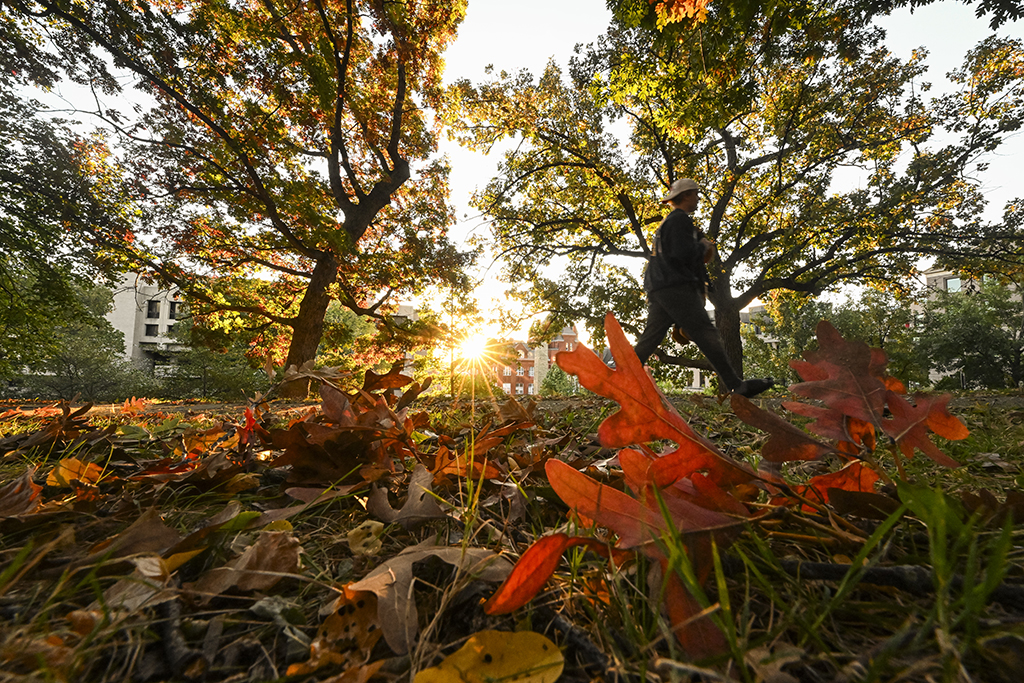
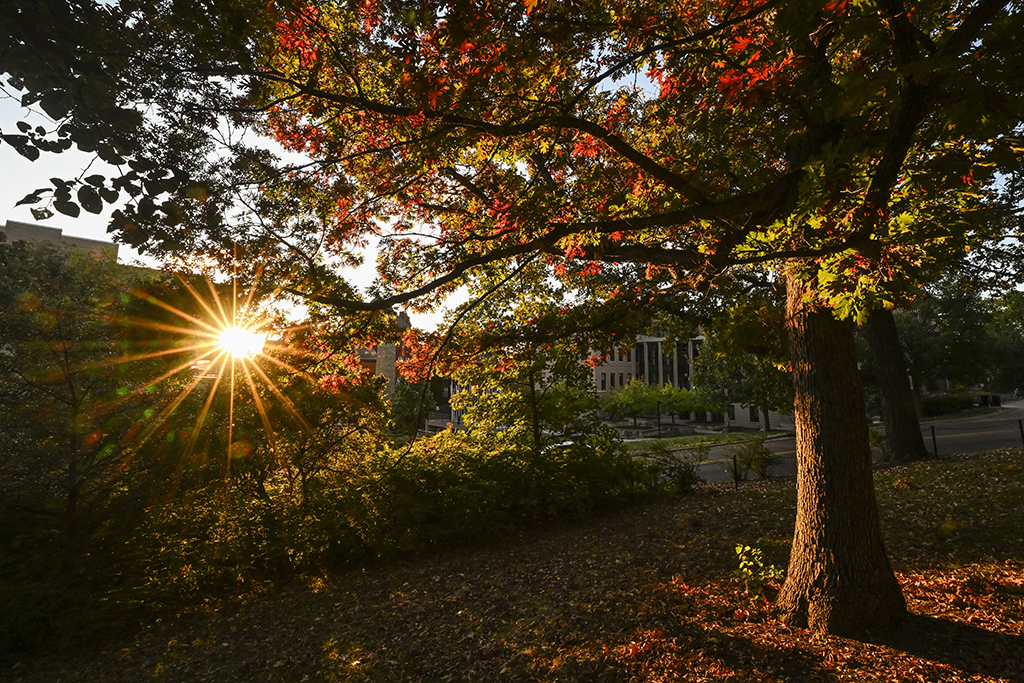
The swamp white oak at Linden and Babcock
If you’ve ever walked past the corner of Linden and Babcock drives, you may already know this tree without even knowing its name. The swamp white oak’s impressive size, form, and low branches make it a prominent presence near the greenhouse and Babcock Hall Dairy Store.
Look closely at the tree, and you can see how campus has grown around it. When the Microbial Sciences Building was designed and constructed, considerable effort went into protecting the oak from soil compaction and damage to its roots and branches. The building’s shape and setback reflect that effort.
The oak also sits along what campus planners call the “Greater Mall,” the tree corridor along the north side of Linden Drive first envisioned in the 1908 Campus Master Plan. Make it a walk: Follow Linden Drive west through the Greater Mall and take in the many large trees that make up this area. Then pause in front of Nancy Nicholas Hall to take in a black locust descended from the famous tree under which John Muir took his first campus botany lesson in 1863 (the original was cut down in 1953).
A rarely seen fall color at Human Ecology
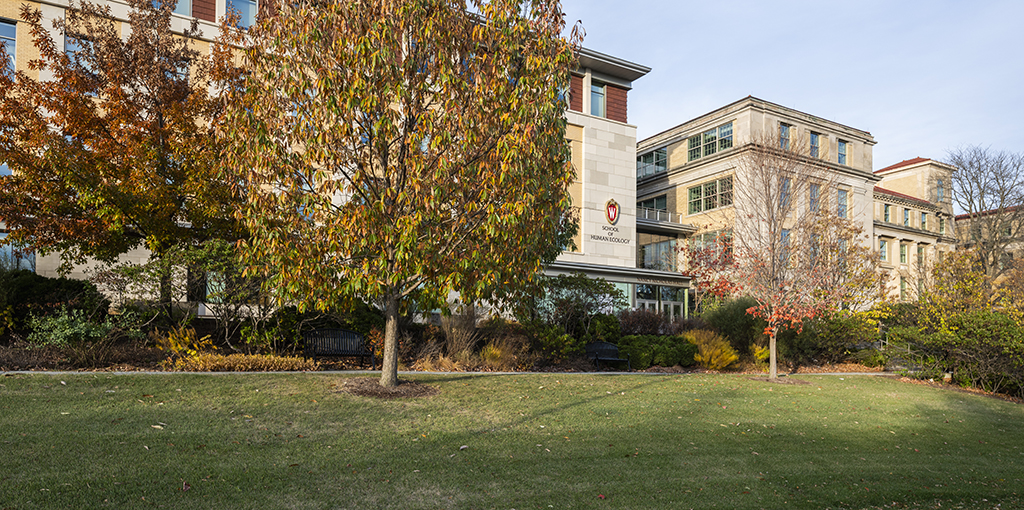
Near the School of Human Ecology, look for an Autumn Purple white ash, a tree with a fall palette that ranges from golden yellow to maroon-purple.
There’s another reason to seek it out. Few of these trees remain on campus, and FP&M treats them to protect them from emerald ash borer, which has devastated ash populations across much of the eastern and central United States. The Human Ecology tree is also a descendant of the original Autumn Purple white ash, giving this survivor another connection to campus history.
For something a little weird, try Birge Hall
Not every memorable tree needs a grand history.
South of Birge Hall, you can find Osage orange trees, which produce large, bright-green, heavily textured fruit roughly the size of a tennis ball to a softball. Think something you might expect to encounter on another planet. While their fruit has largely disappeared by this point in the year, they remain interesting trees to look at.
While you’re there, find the dawn redwood on the south side of the building. Its needles turn a muted russet-gold before falling. Yes, falling. Dawn redwoods are deciduous conifers, meaning they lose their needles every fall and grow them back in the spring.
Need a 30-minute break?
If seeking out a single tree feels like too much work, choose a walk instead. Bronk’s recommendations include Observatory Hill, Lakeshore Path, Allen Centennial Garden, and Bascom Hill.
If you head to Bascom, don’t limit yourself to the familiar mall area. Wander through the spaces between buildings to find unique spots.
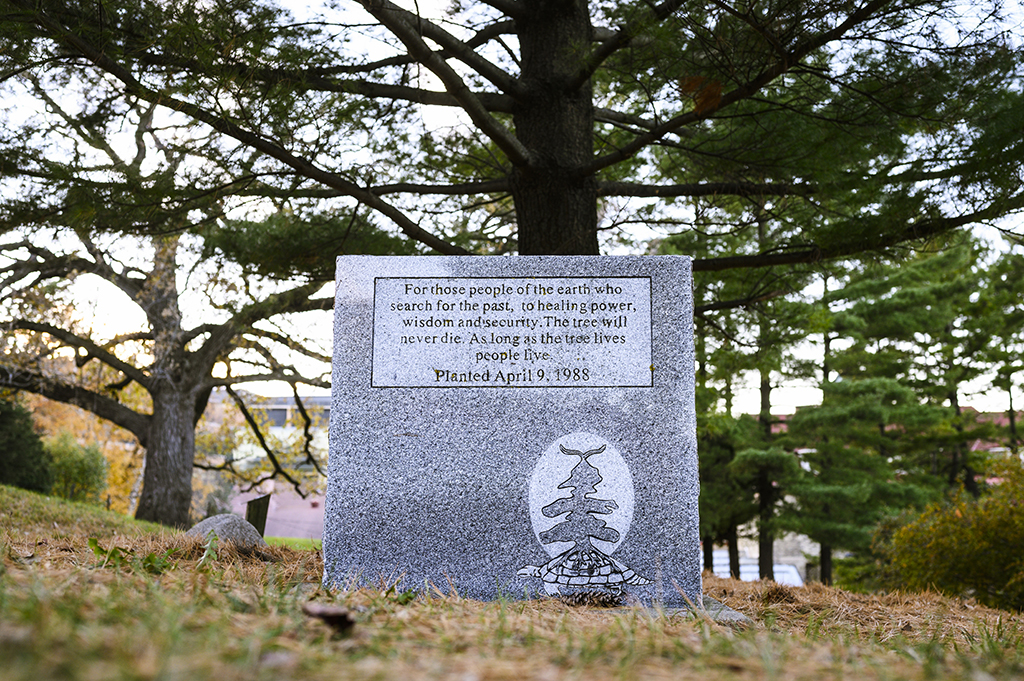
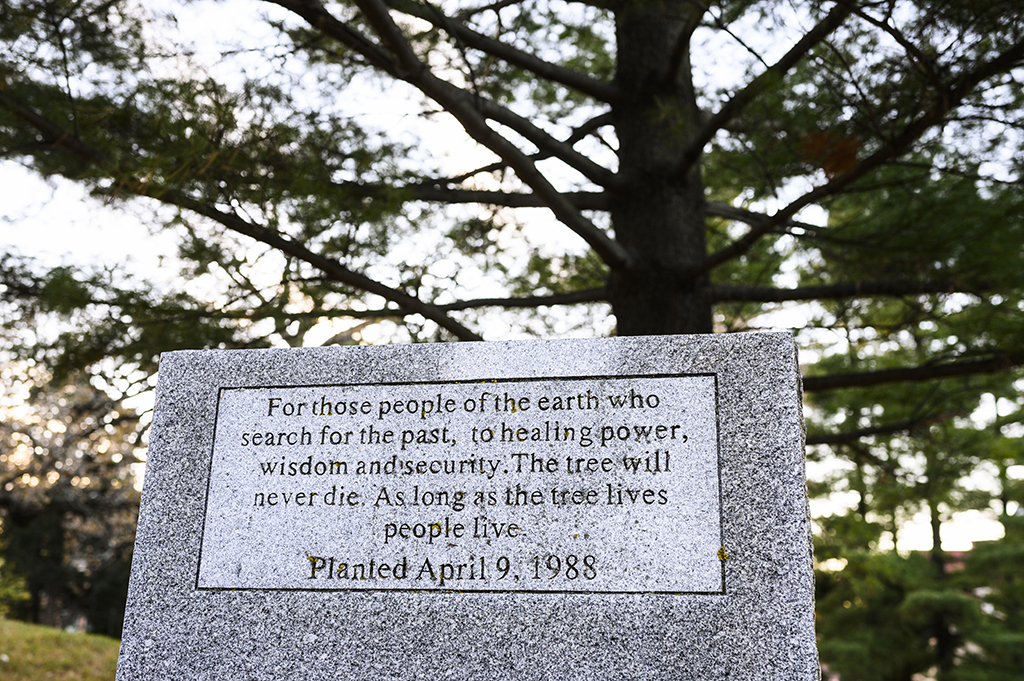
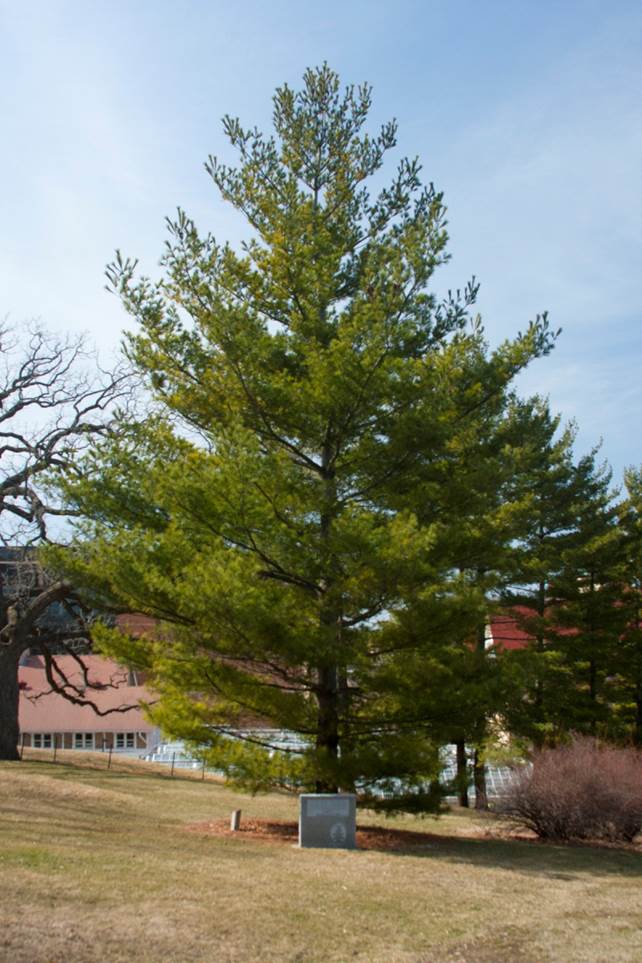
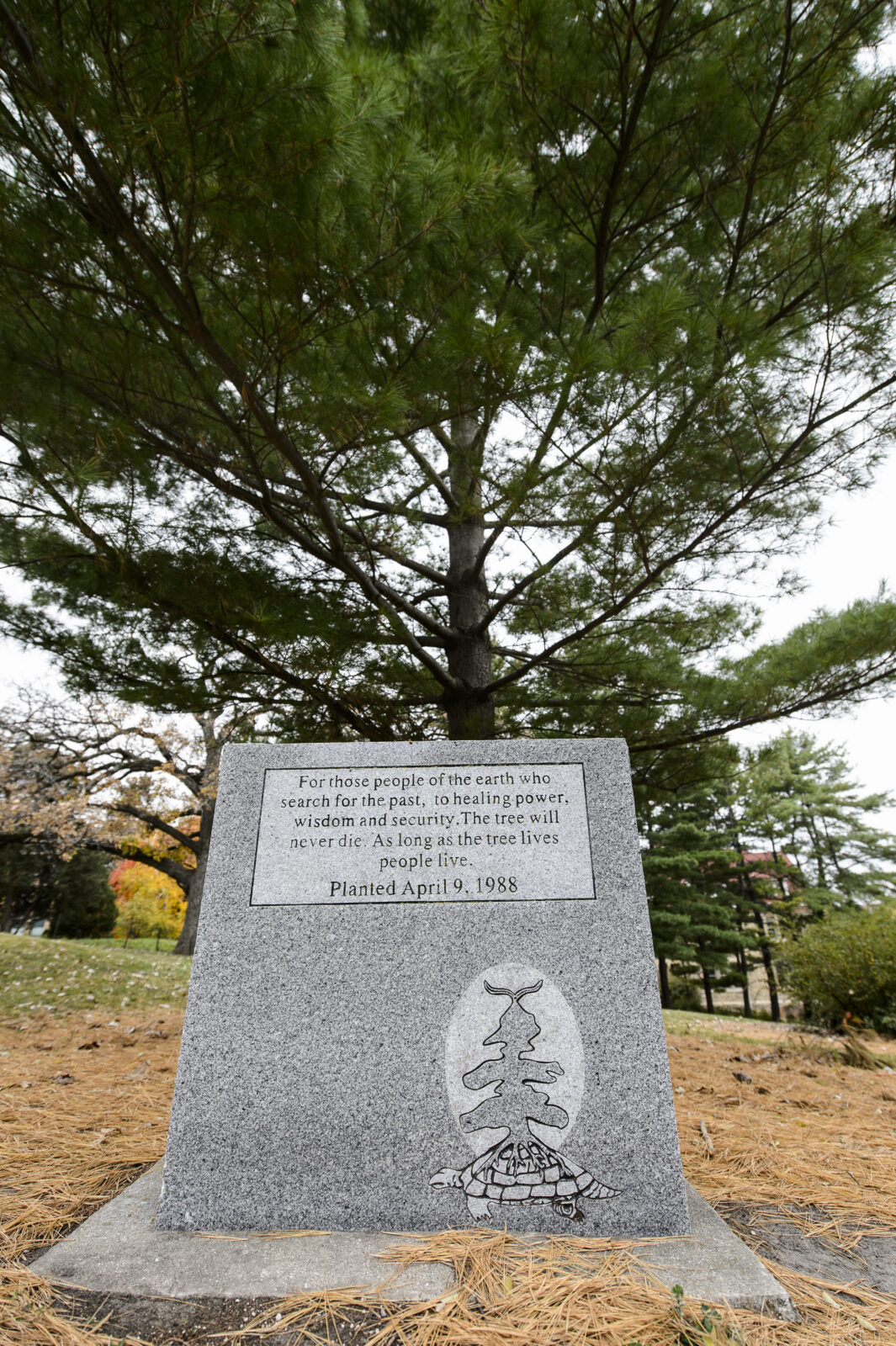
For Observatory Hill, take in the beautiful scenery. Then stop by the white pine known as the Tree of Peace. It might not have changing colors, but it has a story to honor. The tree was planted in 1988 by Mohawk Elder Tekaronianeken, also known as Jake Swamp or Where Two Skies Meet Together, of the Wolf Clan and former sub-chief of the Akwesasne Mohawk Nation. He offered a prayer at the planting ceremony centered on caring for one another and for the environment. The white pine is a living symbol of the Great Law of Peace and the foundation of the Iroquois Constitution.
Or simply wander looking for color
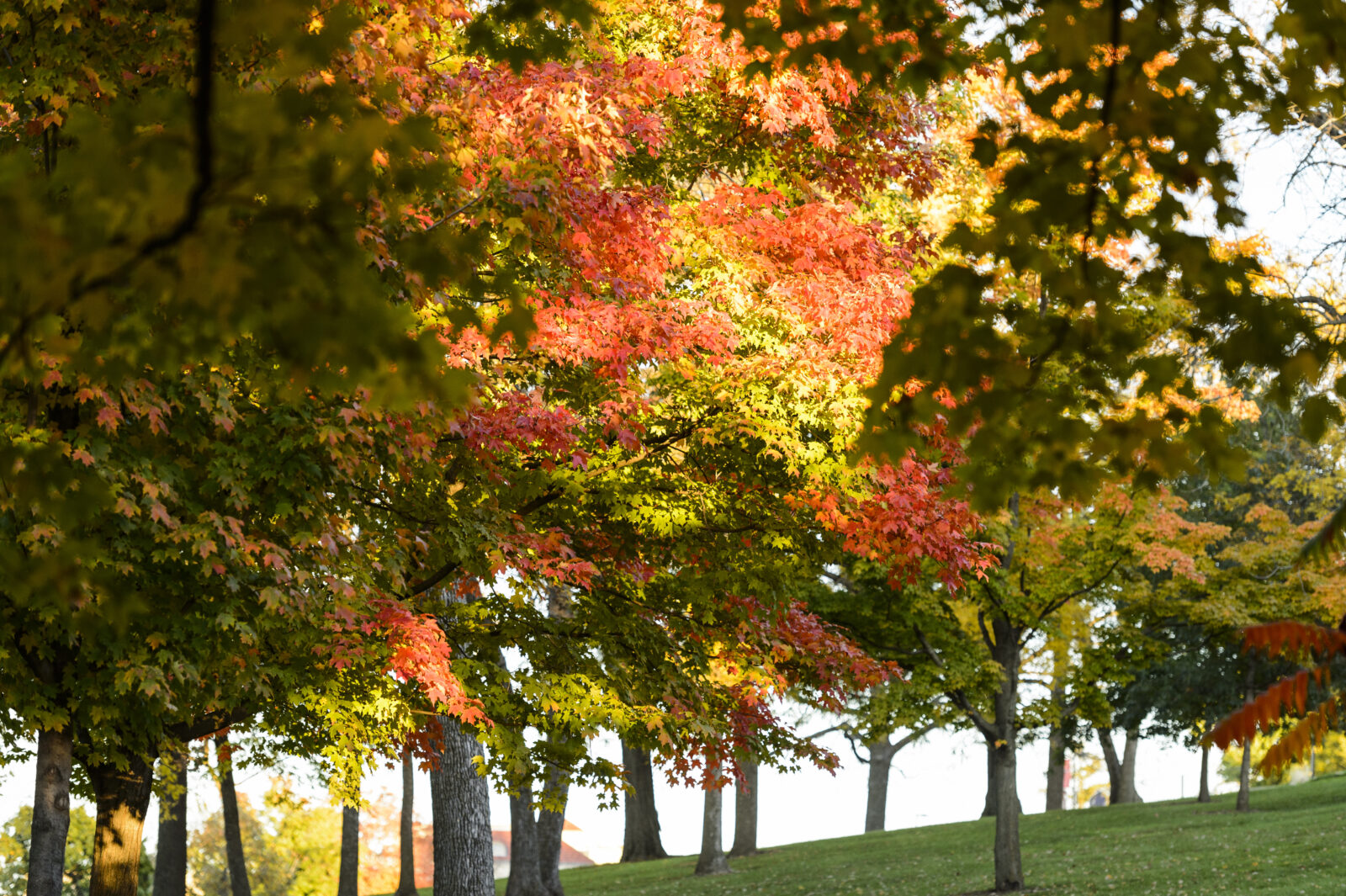
You don’t necessarily need a destination—campus is full of beautiful trees to fall in love with. Sugar maples offer a blend of yellow, orange, and red, including one on the east side of Barnard Hall and many in Caretaker’s Woods. Ginkgo, honey locusts, witch hazels, and poplars bring vibrant yellows, while trees in the red oak family can turn a quieter deep maroon.
One particularly fun find is the witch hazel west of Wendt Commons or on the north side of the Horticulture Building. Along with the bright yellow fall foliage, witch hazel produces unusual yellow flowers in the fall that Bronk describes as looking “like something from Dr. Seuss.”
And sometimes, the best experience isn’t about a single tree at all. Bronk points to communities of trees, including the conifers north of Kronshage Residence Hall, the oaks of the Lakeshore residence hall area, and those in the Camp Randall Memorial Park. Take away those trees, he notes, and our experience with those familiar campus spaces would be remarkably different.
Everyone has a favorite
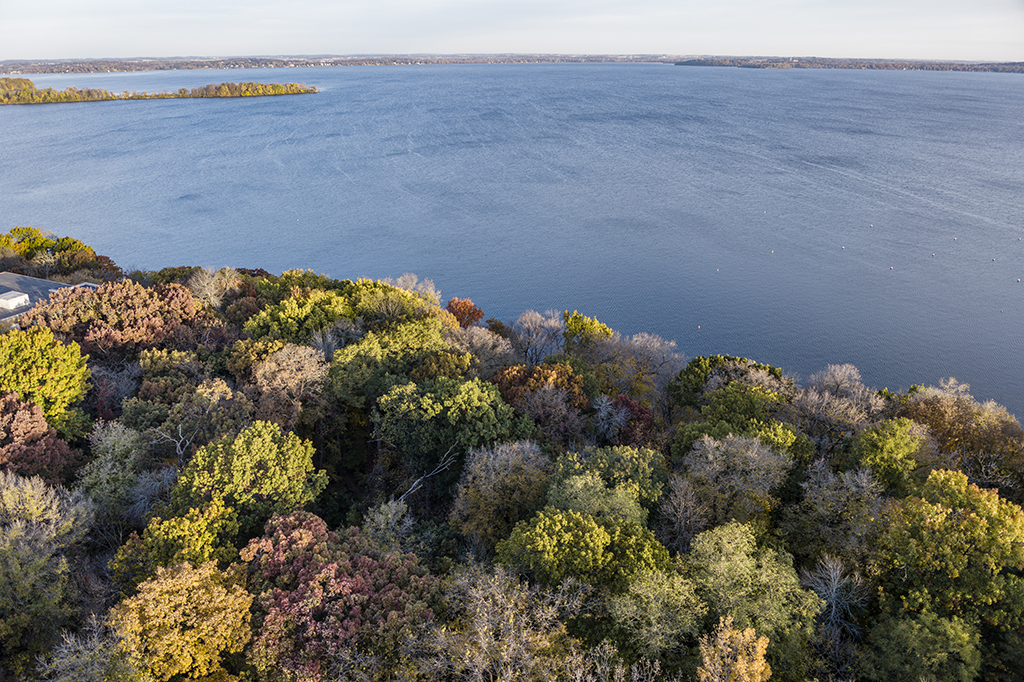
Bronk’s own favorite is a bur oak at the north entrance of Kronshage Residence Hall. There, you can sit on a bench overlooking Lakeshore Path and Lake Mendota and listen to the wind move through the nearby pines.
Sounds like a pretty good reason to leave the office for a few minutes.
Now we want to hear from you: What’s your favorite fall tree on campus? Email us at soas@soas.wisc.edu, and bonus points if you tell us where to find it and why you love it.